
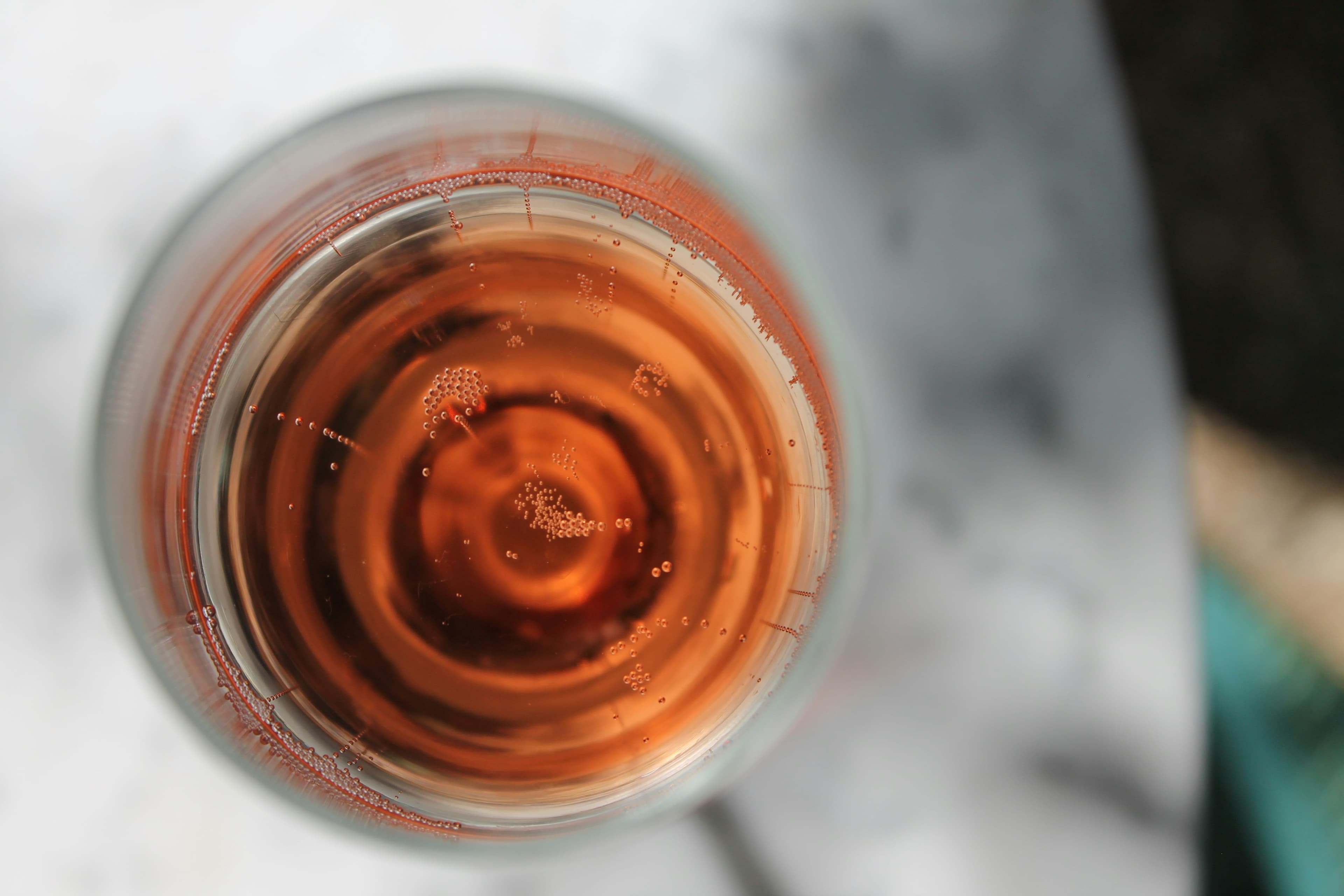
At present, interest in rosé wines among wine enthusiasts is particularly on the rise, and this is driven by several key factors: improving quality, marketing influence, and their growing presence in the portfolios of well-known producers. These wines are no longer seen as simply seasonal or casual, easy-drinking options. More importantly, a clear definition is now applied when evaluating premium rosés. All of this means that rosé wines, once associated with simplicity and a playful, casual style, are now a thing of the past, with the finest examples taking their place on the international wine stage. A rosé revolution is underway worldwide, and Georgian producers are among its participants, crafting wines that, in terms of variety, colour, and flavour, can confidently be called some of the best. The focus of this issue of Homeland of Wine is, fittingly, rosé wines.
Giorgi Samanishvili | Master of Oenology: Today, for the sake of discussion, we can roughly divide rosé wines into the following categories:
I. “Classic Rosé” (Rosé): Produced in Georgia from either red or pink grapes, with the shortest possible maceration. The result is a pale-coloured rosé, free of tannins, delicate, aromatic, and enjoyable. When we use the term Rosé, this is exactly the style of wine we’re referring to. II. Rosé Made Using Traditional Methods: This involves pressing red and white grapes together, or more commonly, fermenting white juice on red grape skins. A prime example is the traditional Georgian rosé Khidistauri, produced by fermenting the white varieties Chinuri and Goruli Mtsvane, on the skins of red Tavkveri grapes. III. “Rosé Wine” Produced from Lightly Coloured Varieties: With this method, the grapes are fermented in contact with the skins for an extended period. The result is a wine of pinkish-amber hue, rich in tannins, powerful and full-bodied, essentially a traditional Georgian amber wine that also expresses rosé characteristics. Within the scope of the main feature, it is precisely these categories and wines that we will be exploring.
David Chichua: A brief clarification: While pink-coloured and Rosé are sometimes used interchangeably, there is a clear conceptual difference. The term Rosé should be reserved for wines produced according to European Union regulations, corresponding to the first category noted by Giorgi. Khidistauri, however, cannot be called Rosé; it should be referred to simply as a pink-coloured wine, especially since Georgian law allows pink-coloured wines to be made by blending red and white varieties- a practice not permitted for European rosé.
Giorgi Samanishvili: Under European Union regulations, blending red and white grape varieties is prohibited only for table wines. Therefore, if Khidistauri Vardisperi were to become a Protected Designation of Origin (PDO), EU law would not forbid this blend, as it would be considered a traditional practice. Anything rooted in tradition is permitted in the EU, even if it involves mixing red and white grapes. Since we currently have neither such PDO wine nor restrictions on blending red and white varieties, winemakers are free to decide.
Kakha Chotiashvili: In Georgia, we have grape varieties, including Vardisperi Rkatsiteli (pink), that are fermented in contact with the skins yet produce wines with a distinctly pink hue. In Georgia, we can refer to such wines as “pink,” but can we do the same in Europe?
Giorgi Samanishvili: In Europe, we could also call these wines “pink” because there is no universally established definition of colour, whether pink, white, or red, worldwide. In Georgia, however, the situation is more complicated. For example, there are “amber-pinks,” wines that lose their pink hue and often take on a coppery tone. These wines shift to yellowish or amber-pink colours, yet they are still considered Rosé. Within the scope of our discussion, we can therefore talk about all wines we regard as Rosé, since Georgian law does not restrict us in this regard.
I should also note that, for the classic rosé category, Saperavi is, in my view, the most interesting variety. I especially enjoy the rosé crafted from it. With direct pressing, the first must is pink, while a slightly longer pressing produces a redder colour. I believe that if a rosé made from Saperavi has a slightly darker hue, this should not be seen as a problem.
Levan Ujmajuridze | Director, Dr. Professor. Academician of the Georgian Academy of Agriculture Sciences (GAAS). LEPL SCIENTIFIC-RESEARCH CENTER OF AGRICULTURE |
There are three main colour categories of grape varieties: white, pink, and red. Each has its own range of shades; for example, red grapes can be relatively light or dark, and the same applies to pink and white varieties. In Georgia, there are around twenty pink grape varieties, the most popular of which is Chkhaveri from Guria. The same region also produces pink Badagi and Tsitlani. In Kartli, there is Tavkveri, in Racha - Urishula, and in Kakheti- Vardispera.
As for Kakheti’s Vardisperi Rkatsiteli (pink), the region’s most widespread variety, this is a Rkatsiteli that has undergone a natural mutation. Vardisperi Rkatsiteli produces naturally pink-colored wine. From naturally pink varieties, maceration alone is sufficient to create a pink-coloured wine without the need for additional intervention. This is why varietal character remains one of the most important factors.
Giorgi Samanishvili: We must also mention clouded, or grey wines.
Levan Ujmajuridze: In our range, we also have grape varieties such as Ghrubela Imeruli (there are also Ghrubela Kartlis and Ghrubela Kakhuri), Vanis Chkhaveri from Imereti, Pirghebuli from Kartli, Beroula, Perovani Pataridzis from Racha, Samchkhavera, and Tsivchkhavera from Guria, among others. These are varieties that correspond to the colour from which pink-coloured wines are produced.
Ivane Nareklishvili & Sons Winery, Kakheti
Vardisperi Rkatsiteli, rosé.
Ivane Nareklishvili | Winemaker: In our ancestral family vineyards, alongside Rkatsiteli, we also had Vardisperi Rkatsiteli planted, approximately ten grapevines, grown together with the main variety. For several years, I produced experimental wines from this variety, using both traditional Kakhetian and European methods. Since we only had a small quantity of grapes, using a large qvevri didn’t make sense, so I used qotsos (small qvevris used in Kakheti). In both methods, Vardisperi Rkatsiteli produced very fascinating results: with the Kakhetian approach, we obtained a light pink-coloured wine, while with the European method, the wine was a slightly paler, almost white shade. Ultimately, we decided to adopt the method, as fermentation in contact with the skins and stems revealed a particularly fascinating interplay of flavour and structure. The first vintage was produced in 2020, using grapes sourced from the vineyards of Alaverdi Monastery. That year marks the launch of our company’s Vardisperi Rkatsiteli, crafted using the Kakhetian method.
Giorgi Samanishvili: This Vardisperi Rkatsiteli is one of the finest examples I have tasted. It should also be noted that this variety produces excellent amber wines, sometimes even more fascinating than the traditional amber styles.
David Chichua: It is a very lively, vibrant wine with a delicate structure. Elegant and refined, it can even be called a Rosé. At the same time, it has a crisp, lively acidity.
Kobidzeebis Marani (Kobidze's Wine Cellar)
Dato’s Wine, Guria
Ancestor Wine
Chkhaveri
David Kobidze | Winemaker: We can speak of two wines produced from Chkhaveri in our cellar. One is made with a 72-hour maceration, and the other with a 14-day maceration. Although both come from the same grape, the two wines differ in colour, structure, and flavour profile.
The first is Ancestor Wine, made from vines planted by our great-grandfather that still bear fruit today. Before making this wine, we had never experimented with a 72-hour maceration. Traditionally, we relied on two main methods: Fermentation without skin contact, the process known in Guria as “petki,” and a 14-day maceration on the skins. Later, we introduced a third approach - a 72-hour maceration without stems - which produced a lighter, more delicate wine.
David Chichua: As a wine chemist, I would like to highlight an important principle. With light red and pink grape varieties, a short maceration can produce a more expressive pink hue than aging on the skins for six months. A two- to three-day maceration, followed by pressing and careful oxidation-free storage, results in a wine with a more pronounced anthocyanin hue. In contrast, six months of aging on the skins allows oxidative development, during which brown nuances intensify and can overshadow the pink tones.
David Kobidze: I would like to return to the Ancestor Wine. A Chkhaveri grapevine planted in our yard by my great-grandfather is now 150 years old and still thriving. Our American colleagues suggested making wine from its grapes. Each year, it produces around 200 to 300 bottles. A 72-hour maceration yields a wine with a delicate pink hue.
Levan Ujmajuridze: For a three-day maceration, this is an excellent colour. Chkhaveri has a long vegetative cycle. Although the cumulative active temperatures in Kakheti are higher than in western Georgia, it is precisely the western climate that suits Chkhaveri best, allowing it to ripen better and develop more body than in the east. This is not determined by cumulative temperatures alone; it is also inherent in the variety itself, in its natural character.
Giorgi Samanishvili: Which style of your wine do consumers prefer, the lighter, pink-hued version made with a 72-hour maceration, or the deeper-coloured one produced with a two-week maceration?
David Kobidze: Both styles have their own following, although consumers tend to prefer the lighter, pink-hued version made with a 72-hour maceration.
Levan Ujmajuridze: That is only natural, as Chkhaveri is associated with rosé wines.
Shalva Alelishvili: Rosé wine is a category in which the winemaker operates within a very narrow phenolic window in the vineyard, and in the wine, there is very little room for error. For this reason, the winemaker must be highly focused, and the winery must be properly equipped. It should also be noted that rosé wine is a category that stands to benefit the most from advances in oenology.
Giorgi Samanishvili: Rosé wine is the only category that is still growing. Such wines account for around 10% of global wine production. It is growing precisely because it remains relatively limited. Consumption in this category is set to increase further, as global trends show a decline in demand for red wines, as well as for wines that require more food to accompany them. White and rosé wines are easier to drink and, accordingly, more in demand. It is encouraging to see that in Georgia, the trend has shifted, with consumers showing a greater preference for rosé wines than they did even 15 years ago.
Chotiashvili Family Winery | Kakheti
Rosé, Nista SB, Montepulciano, dry.
Kakha Chotiashvili | Winemaker: My connection with rosé wines began when my daughter Nista expressed a wish for us to make this type of wine. The first attempt was in 2016. Since we didn’t have a vineyard with a suitable variety, we selected whatever was available in our village, an Italian Montepulciano, and vinified it using the classic technique. I pressed the grapes, separated the juice from the skins on the third day, and fermented it.
This grape is unique in that its colour varies slightly each year, depending on climatic conditions, producing wines that can be either a little darker or a little lighter. This variability is what inspired the rosé in our family winery’s portfolio. Each year, we produce between 1,000 and 1,500 bottles, which we sell successfully in several countries. Looking ahead, we plan to expand this line. I want our family cellar to offer a diverse range of rosé wines, including those made from Georgian grape varieties. This approach is guided both by market demand and my own passion for experimentation.
This is the first gathering specifically dedicated to discussing rosé wines, which makes it particularly significant. Georgian rosés are remarkably diverse in terms of grape varieties, production methods, colour, and flavour. Georgia can offer a wide range of rosés to both local and international markets, especially as these wines are in demand almost year-round. Discussions such as this represent an important step forward for every winery, including our own.
Levan Ujmajuridze: Kakheti offers excellent opportunities for interesting experiments, particularly in terms of grape varieties. Take, for example, Saperavi Budeshurisebri or Simonaseuli, both of which have strong potential for producing high-quality rosé wines.
Kakha Chotiashvili: This is an excellent idea that has just emerged. As we have Simonaseuli planted, I will certainly make a rosé from this variety.
Levan Ujmajuridze: Akhmetis Tsiteli is also a promising variety, capable of producing interesting rosé. The same can be said of Zhghia and Tskobila. Simonaseuli, Zhghia, and Tskobila are all endemic Georgian varieties that were once thought to be lost. Fortunately, they have now been identified, revived, and their oenological characteristics assessed, and are now gradually being reintroduced into wider production.
As for western Georgia, Guria’s winemaking is not limited to Chkhaveri; it also includes Badagi and Chumuta. Therefore, each region has its own unique charm, opportunities, and varietal diversity.
Kakha Chotiashvili: In recent years, consumer attitudes toward rosé wines have changed dramatically. Whereas these wines were once considered a light drink primarily for women, today our customers often describe rosés as a symbol of freedom. I wholeheartedly agree with this view, as rosé is indeed a wine that embodies freedom, enjoys broad appeal, and is greatly appreciated in Georgia. Around the world, there are competitions and festivals dedicated to rosé wines, and we frequently receive invitations to participate.
Giorgi Samanishvili: For example, in France, there is the Rosé Wine Research Institute that focuses exclusively on this category of wines. It has produced significant findings on colour, sensory descriptions, and maceration techniques. Global consumption of rosé wines is increasing, yet it remains comparatively low. Whether we agree with it or not, the stereotype persists that rosé is a wine for quick consumption, best served chilled, aromatic, and easy to drink. Within the scope of our discussion, both Chkhaveri wines we tasted easily defy this stereotype.
If we aim to position ourselves in the mid-price segment, we offer classic rosés for that purpose. At the same time, we also produce “amber-pink” and “white-red” wines, and if we diversify this range further, the greater its potential on the global market.
David Chichua: When it comes to wine colour, a winemaker should not feel restricted, as neither our legislation nor foreign regulations impose limits. For example, in Germany, a winemaker can produce both rosé and red wines from Spätburgunder (Pinot Noir), as well as Weissherbst, which is legally a rosé, even though the term “white” appears in its name.
Giorgi Samanishvili: This freedom is particularly important in winemaking, because the more we standardise, the greater the risk of producing a wine that resembles other, less interesting products.
Marani Ghvinia | Samtskhe-Javakheti
Tavkveri, Rosé.
Shalva Alelishvili | Winemaker: This Tavkveri was harvested in the Bolnisi microzone. The grapevine is quite old, planted in 1967. From the outset, we had a clear goal: to create a rosé that is highly structured and multi-layered, yet maintains an elegant, light colour. To achieve this, we employed batonnage and oak. Maturing the wine in casks was a deliberate and carefully considered decision.
The Tavkveri was left to rest for 100 days in neutral, untoasted oak casks, resulting in greater palate weight and enhancing the wine’s ageing potential.
Levan Ujmajuridze: I agree that the cask must be neutral, so that the wine’s varietal character and aroma, which are its main charms, can shine through. This wine is a good example of that.
Giorgi Samanishvili: This Tavkveri is exactly the kind of rosé that has been crafted for ageing.
Shalva Alelishvili: In Meskheti, we have an excellent environment for producing rosé wines. Shavi Aspindzura is quite widespread here, and I plan to make rosé from it in the future.
Levan Ujmajuridze: Shavi Aspindzura is an excellent variety, as are Meskhuri Shavi, Tamaris Vazi, and Meskhuri Sapere. Meskheti offers a full spectrum of red grape varieties, many of which have great potential for producing outstanding wines.
David Chichua: Every sample tasted today within the scope of the main feature was exceptionally interesting. None of them fall into the stereotypical, mainstream category that still shapes perceptions of rosé wines, the idea that such wines must be simple, fruity, light, delicate, high in acidity, and generally enjoyed while young.
Giorgi Samanishvili: When discussing stereotypes about rosé wines, I usually highlight two main styles. First, the Provence-style rosés, which are extremely pale; when poured into a clear bottle, they can sometimes be hard to distinguish from white wine. Second, the Bordeaux-style rosés (clairet). Our consumers tend to prefer the latter, the darker rosés, because this deeper colour is more exotic and appealing. I believe Georgian rosé wines will always be slightly darker than their international counterparts.
I would also like to highlight another trend: globally, rosé wines are becoming increasingly delicate and soft, and there is growing demand not for dry, but for semi-dry rosé wines. Why? Because they are gentle, smooth, and more expressive.
Marani Zodi | Imereti
Dzelshavi rosé, semi-dry wine.
Giga Chighladze | Winemaker: The Dzelshavi produced by our winery is a semi-dry rosé made from grapes harvested in Sachkhere and Chiatura. After a 12-hour maceration, the juice is separated from the skins and returned to the qvevri to continue fermentation. This technique produces a softer wine that is very approachable and enjoyable.
Levan Ujmajuridze: In Imereti, Dzvelshavi Sachkheris, which is often simply referred to as Dzvelshavi, differs from Dzvelshavi Obchuri. This variety, like Rko Shavi, provides one of the best bases for producing deeply coloured rosé wines.
Giga Chighladze: In our vineyards, the clusters of Dzelshavi never turn completely red. When ripe, one side of the cluster develops full redness, while the other retains a comparatively pink hue. Because Dzelshavi does not naturally have high sugar levels, we always aim for a late harvest to achieve the sugar concentration needed for producing semi-dry wine.
David Chichua: On one hand, there are theoretical expectations and logic about which grape varieties make the most sense for producing rosé. On the other hand, there’s a purely pragmatic, economic calculation. Luckily, in our winemaking regions, we already have a wealth of knowledge, hands-on experience, and proven results in practice.
Theoretically, we know that rosé needs aromatic intensity, finesse, and high acidity. In practice, though, we can say that excellent rosé can be made from Tavkveri, and we have numerous examples from Kartli. Our experience with Tavkveri rosé is extensive and positive, both historically and in modern winemaking. We can say the same about grape varieties from western Georgia, like Dzelshavi, from which many fascinating rosés have been made in recent years. Then there’s the pragmatic side: when a winemaker has a Dzelshavi vineyard, each year they need to think carefully about how best to use the grapes, whether for rosé or for a wine that might make more commercial sense for them. Deciding this isn’t easy. Rosé from Aleksandrouli or Mujuretuli can be fantastic, yet semi-sweet Khvanchkara often makes more commercial sense. That’s why winemakers are frequently faced with tough choices.
Levan Ujmajuridze: One shouldn’t forget Aladasturi, one of the most important grapes for rosé. I’m referring to Gurian Aladasturi, not the variety grown in eastern Georgia, which was imported and is mistakenly referred to as Aladasturi. And, of course, Chkhaveri is simply unmatched.
David Chichua: We face the biggest challenges in the Kakheti region. One of the right approaches is what Kakha Chotiashvili suggested, using international varieties to make rosé. Very good rosé can be produced from Pinot Noir, as well as from Montepulciano. In this regard, we don’t yet have significant practical results in Kakheti. However, we can confidently turn to Cabernet, which also yields fascinating rosé. Although this discussion doesn’t focus on red wines, it’s worth noting that it’s unfortunate how rare it has become to find high-quality Cabernet as a standalone wine in recent years. Most of the time, the variety is blended with Saperavi.
It’s widely accepted around the world that a winemaking region is closely associated with a specific grape variety and the wine style that reflects that region. In this sense, Georgia enjoys complete freedom; anyone can make the wine they want from whichever variety they choose. For now, this freedom is a positive thing, as it allows us to gather valuable information. Eventually, this accumulated knowledge will be filtered, and clear priorities will emerge. Based on logical expectations, I can already say that specific rosé-producing regions will emerge in Georgia. Take Meskheti, for example, where red varieties can be cultivated. Depending on the vintage and growing conditions, winemakers can then decide whether to produce full-bodied red wines or rosé. Having this kind of fallback option is essential, as yields vary from year to year.
Levan Ujmajuridze: In short, we have the tradition, the technology, the grape varieties, the regional locations, and plenty of experience. When it comes to the climate, a winemaker needs to read it carefully, extract everything it has to offer, and shape the vineyard to match it.