
Abedati, one of the largest villages in the Martvili district, lies on the right bank of the Abasha River. The village is home to the Abedati Fortress, a multi-layered historical monument, with its oldest section dating back to the 4th-6th centuries.
According to Georgian architect and art historian Parmen Zakaraia, the oldest part of the Abedati Fortress is historically linked to Onoguria, an ancient stronghold in western Georgia that served as a key strategic point in the kingdom of Egrisi (Lazica). Later, the manor house and fortress tower that were built were attributed to the House of Dadiani.* Under the manor house, fragments of qvevris were discovered, evidence of a marani (cellar) that once existed there.
Archaeological excavations on the fortress grounds have uncovered Hellenistic pottery dating from the 3rd to 1st centuries BCE, as well as kirmaneuli (Western Georgian Kirman coins) from the 13th to 15th centuries. Inside the fortress walls, a church is built into the eastern wall, believed to date back to the 9th century. From here, panoramic views stretch across the Colchian Plain. Against this stunning backdrop, winemaker Khatia Jakhua welcomes visitors to Abedati with her Ojaleshi, crafted in her cellar. She shares stories of the fortress, the noble families of Samegrelo, Colchian red pheasants, and the region’s local grape varieties. She is a uniquely captivating figure in contemporary Georgian winemaking.
Located in the village of Abedati, the family winery Argvani is run by Khatia Jakhua and her brother Besik Jakhua, together with their family. They grow one of the finest Megrelian grape varieties, Ojaleshi, and skilfully produce wine from it using both the traditional Georgian qvevri method and classic winemaking techniques. Working with this grape variety is not easy, and achieving the best results can be quite challenging. At Argvani, we are dealing with an especially interesting Ojaleshi, making this wine a must-try. However, the cellar is not limited to Ojaleshi, and the winery also offers other wines on the local market.
We explore Abedati and Argvani, their local wines, Megrelian traditions and culture, and, of course, winemaker Khatia Jakhua, a devoted guardian of her family’s winemaking heritage.
*The House of Dadiani: Dukes of Odishi (Samegrelo). By the 1280s, the family had become the most powerful feudal house in western Georgia, with branches also governing Svaneti, Guria, and Bedia.
Khatia Jakhua is a painter-restorer by profession, with fresco restoration and conservation among her principal fields of work. The Colchian red pheasant, now the logo of the family cellar, Argvani, was discovered by her on a fresco at Martvili Monastery.
“It was 2008, and our country was at war. My friends and I stood fearlessly on the scaffolding, working on the conservation of the unique frescoes of one of Georgia’s most important architectural monuments - Martvili Monastery. You can hardly imagine the number of remarkable details each fresco holds, details that often escape the eye of the visitor. Take, for example, the 17th-century frescoes of Giorgi Chikvani, Sevdia Mikeladze, and their son Otia Chikvani, whose garments were richly adorned with intricate ornamentation and embroidery. Or the fresco of Mariam, sister of Levan Dadiani, the ruler of Samegrelo, depicted in a beautifully detailed dress and necklace. In the same monastery, there is one fresco that holds a special place for me - that of Khvarashani (the woman of Lipartiani*). Her dress is decorated with the Colchian red pheasant. It is impossible to visit Martvili Monastery and see this fresco without being captivated by it.
The Colchian red pheasant is a species listed in the Red Book, yet these birds still inhabit our village today. The Colchian red pheasant depicted on Khvarashani’s dress became the symbol and logo of our family cellar, Argvani. Through it, we share with our customers the story of Georgian women, the country’s exquisite traditional clothing, our region and village, and, of course, the rich traditions of winemaking. All thanks to this one Colchian red pheasant - a species that has lived in our region for centuries,” says Khatia.
The Story of Argvani
(Argvani means qvevri in Megrelian)
In the village of Abedati, the place where Khatia’s family vineyard is planted is called Argvani.“The story of our cellar is linked to my grandfather and his deep love for the vine. He was an engineer-architect, but he loved vineyards deeply. He even planted one himself. I remember how he would get up each morning and walk through the vineyards - he could hardly imagine life without it. He even had a vintner and a wine grower. During the harvest, the whole family would get involved - all four of us siblings would help press the grapes in the wine press. In the mornings, my grandfather and I would check on the fermentation in the qvevris and taste the must. Then came the war in Abkhazia (1992–1993), and no one had time for the vineyard. After my grandfather passed away, the vineyard fell into ruin, but his dream never died.
* Salipartiano was a fiefdom within the Principality of Samegrelo, a feudal polity in western Georgia ruled by the Dadiani dynasty; its ruler held the title of Lipartiani.
A few years ago, my brother and I began turning this dream into reality and planted a vineyard in the very spot in our village known as Argvani. Today, the traces of the old vine terraces and qvevris are still visible. This place holds a certain sacred significance for me, which is why we chose Argvani as the name of our cellar. On this land, we first planted Ojaleshi, followed by Chvitiluri, a white grape variety native to Samegrelo. We will soon share the results of these wines with our customers.
The soils of Samegrelo are very similar in composition to those of New Zealand, which gave us the confidence to take a risk and add Sauvignon Blanc to our vineyard. Today, these three varieties cover nearly two hectares. In the future, we plan to plant another rare white Megrelian variety- Machkhvaturi. Wines from this grape are lighter in body than Ojaleshi, with aromas of blackcurrant, a delicate texture, and high acidity.”
Ojaleshi is a red grape variety from Samegrelo that produces exceptional wine. The bunches are small to medium in size, with medium compactness. The berries are dark blue to almost black, with fairly thick skins that separate easily from the pulp. They are covered with a delicate bloom and are quite juicy. The wine is characterised by a rich red colour, high extract, harmony, and vibrancy.
Along with its body and balance, Ojaleshi has excellent ageing potential. With age, Ojaleshi develops pleasant aromas. In Samegrelo, it has traditionally been used to craft red, semi-sweet wines, but the variety also has good potential for producing dry red wines. Ojaleshi is prone to fungal diseases, particularly powdery mildew. In Samegrelo, the grapes typically ripen around mid-November.
Chvitiluri is a white grape variety from Samegrelo belonging to the group of high-quality wine grapes. It was once widely cultivated in the hillside villages of
Samegrelo, including Tsalendjikha, Kortskheli, Nakipu, Chkhorotsku, Sachino,
Mukhuri, Gegechkori, Tamakoni, Salkhino, and others. Today, this variety is rarely found.
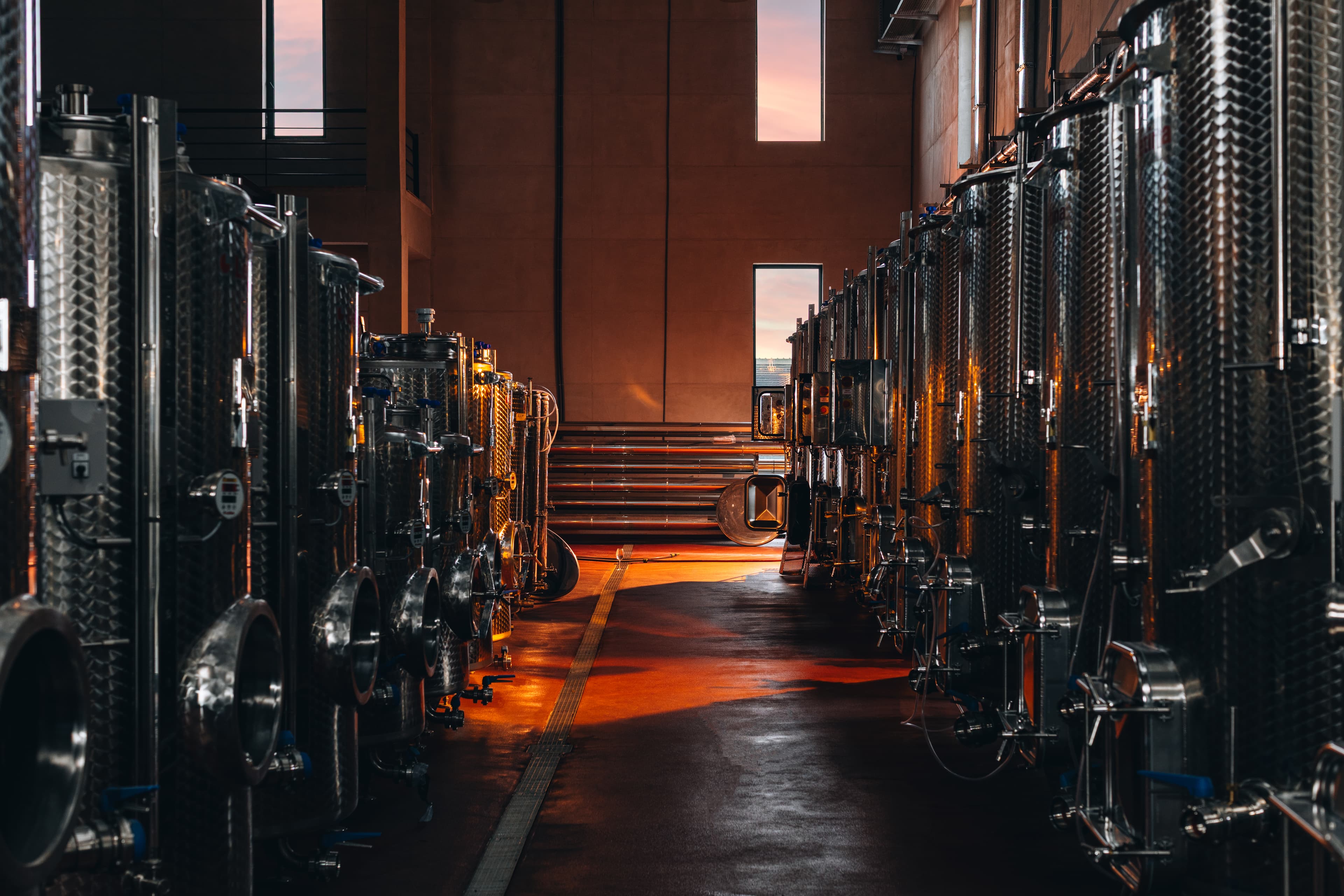
Similar to other regions in Georgia, Samegrelo has a rich, centuries-old history of viticulture and winemaking. However, the sector suffered greatly during the Soviet period, when vineyards were widely uprooted and replaced with grain crops. The effects of these disruptions are still felt in Samegrelo to this day. Many grape varieties are considered extinct. Local winemakers are actively working to replant them and revive wine production. One notable example is the Argvani cellar, which has been writing its own story since 2021- with eight qvevri, several grape varieties, and wines that have already made a memorable impression on wine lovers.
“As you may know, Samegrelo is not blessed with white grape varieties,” says Khatia. “To fill this gap, we turned to the neighbouring region of Imereti and added the Tsitska and Krakhuna varieties to our cellar’s wine range. Our 2023 Tsitska was very well received, which motivated us to continue working with Imeretian varieties. We develop our red wine range using Megrelian grapes, while Imeretian varieties are used for the whites.”
Argvani Wines:
Ojaleshi, 2023 – a dry red wine made using the traditional qvevri method. It has a ruby colour, high acidity, and aromas of red berries.
Ojaleshi, 2024 – a dry red wine made using the classic method. It has a ruby colour, a balanced, harmonious palate, and aromas of red berries and spices.
Krahuna, 2024 – a dry white wine made using the classic method. It has a straw colour, pleasant acidity, and aromas of citrus and wildflowers.
Tsitska, 2023 – a dry white wine made using the classic method. It has a straw colour, high acidity, a crisp character, and pleasant aromas of white fruit.
Before the ancient Megrelian grape varieties in Argvani’s vineyards reach their full potential and become new wines, follow Khatia Jakhua to the Abedati fortress and taste her Ojaleshi. Nothing connects you to Samegrelo, this stunning region, quite like this wine.